

In the fast-moving world of social media, a single post can thrust an athlete into an unexpected global conversation. On September 24, 2026, an X user known as Ruby Quinn (@RubyQNUFC) shared a post that quickly amassed tens of millions of views.


The post referenced a circulating video involving Spanish footballer Clàudia Pina and described her as someone who has “always been naughty,” pairing the comment with two images: one of Pina in her FC Barcelona Femení match kit and another from a leisure boat outing in which she appears topless while covering herself.
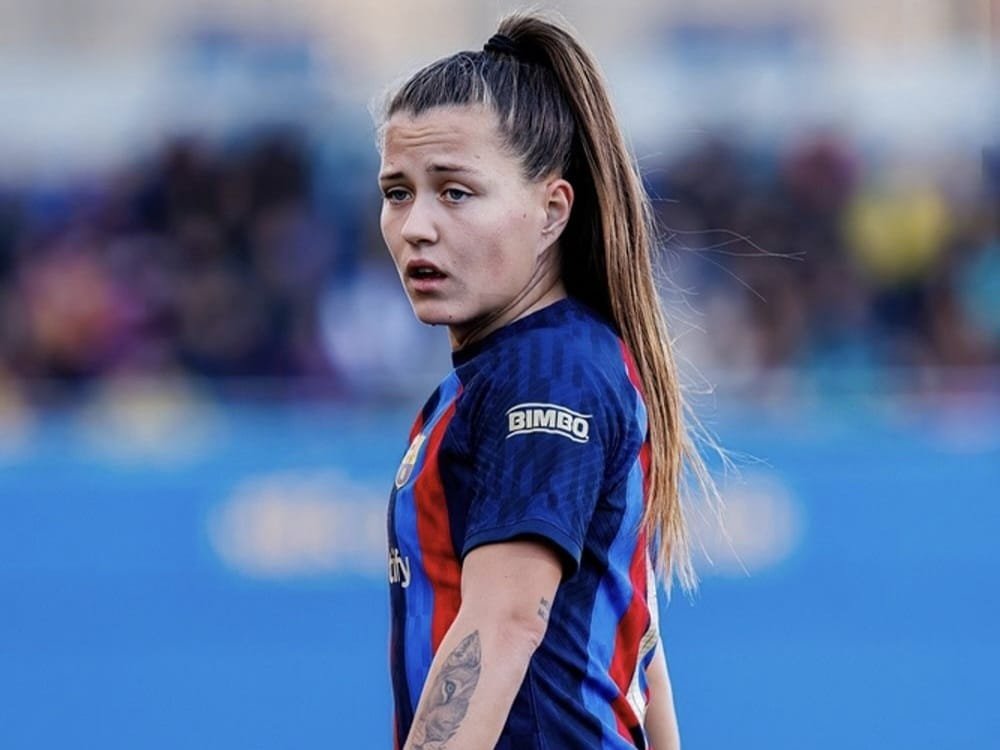
The post, which included the Spanish flag emoji, rapidly gained traction, drawing likes in the tens of thousands, extensive sharing, and widespread commentary across the platform. What began as a casual observation about content “doing the rounds” evolved into a broader discussion touching on athlete privacy, the public’s appetite for personal images of female athletes, body confidence, and the evolving culture surrounding women’s football.
Pina, a highly accomplished forward for Barcelona and the Spain national team, found herself at the center of renewed attention that mixed admiration for her on-pitch achievements with scrutiny of her off-pitch presentation. The episode highlights both the opportunities and challenges that come with the growing visibility of women’s sports in the digital age.
Clàudia Pina Medina was born on August 12, 2001, in Montcada i Reixac, near Barcelona. She began her football journey in futsal before being spotted by Espanyol scouts and later joining Barcelona’s youth system in 2013. At a young age she displayed exceptional scoring ability, once netting 100 goals in 20 appearances for a youth side. She made her senior debut for Barcelona in January 2018 at just 16 years and five months old, briefly holding the record as the youngest player to feature in an official match for a senior Barça team. After a loan spell at Sevilla in the 2020-21 season to gain experience, she returned and established herself as a key attacking option.
Over the years Pina has developed into one of the most consistent and creative forwards in European women’s football. Known for her one-touch passing, intelligent movement, and ability to score from distance with a characteristic curled technique, she has delivered in high-stakes matches. She has contributed significantly to Barcelona’s sustained dominance in Spanish and European competitions. By early 2026 she had surpassed 200 competitive appearances for the club, scoring nearly 100 goals across all competitions in that span. Her trophy cabinet includes multiple Liga F titles, Copa de la Reina wins, Spanish Super Cups, and UEFA Women’s Champions League successes. In the 2024-25 Champions League campaign she finished as the competition’s top scorer with ten goals. She has also represented Spain at various youth levels, including as a Under-17 World Cup winner, and has featured for the senior national team, contributing goals and assists in major tournaments.
Barcelona Femení under successive coaching staffs has become a powerhouse, regularly challenging for domestic trebles and European titles. Pina has often operated on the left of the attack or as an inside forward, linking effectively with players such as Alexia Putellas, Aitana Bonmatí, and Salma Paralluelo. In the 2025-26 season she continued her strong form, including a notable hat-trick as a second-half substitute in a league match and consistent contributions in Champions League fixtures. Her contract was extended in late 2025 until 2029, reflecting the club’s confidence in her as a long-term cornerstone. Pina has publicly described Barcelona as “the club of my life,” expressing excitement about continuing her career there while aiming to grow as both a player and person.
The specific content that fueled the September 2026 X discussion appears to stem from two related strands of material. One involves a playful on-pitch or celebration moment that circulated earlier. During Barcelona’s 2026 Copa de la Reina final victory celebrations against Atlético Madrid, goalkeeper Cata Coll was filmed engaging in light-hearted, cheeky interaction with Pina. The clip, which showed physical banter between the teammates, drew significant online attention at the time and contributed to heightened interest in Pina. Separate from that, photographs from a private boat outing—showing Pina and friends in swimwear, including images in which she is topless and covering her chest—began circulating more widely. Reports indicated that similar images had previously appeared in contexts linked to personal social media sharing during vacations, including leisure time with teammates such as Cata Coll. Some coverage described the material as a “leak,” while other commentary noted that Pina has shared confident, revealing images of herself in the past on platforms such as Instagram.
Ruby Quinn’s original post framed the circulating video as unsurprising given Pina’s established public persona. The attached images juxtaposed her professional athletic identity with a more personal, relaxed moment. Within hours the post had racked up enormous engagement figures, including over 60,000 likes and view counts climbing into the multi-millions. Replies and quote posts ranged from humorous reactions and compliments on Pina’s appearance to criticism of the framing and concerns about privacy. Some users celebrated what they saw as body positivity and confidence; others questioned whether circulating intimate images, even if previously shared in limited contexts, crossed lines when amplified at scale.
Later the same day and into the evening, the original poster addressed the viral response. In follow-up posts, Ruby Quinn clarified that the intent was not to disrespect Pina. The author stated that the video in question showed playful, cheeky behavior between Pina and a teammate on the pitch and that the post was inspired by that light-hearted moment. Quinn emphasized admiration for Pina as a brilliant footballer and expressed hope that the discussion would not cast the women’s game in a negative light. The clarification noted that women should feel free to celebrate their appearance, feel confident in their bodies, and express themselves as they choose. It also referenced that Pina has shared topless images on Instagram herself, describing her figure positively while acknowledging that the scale of the conversation—millions of people discussing her appearance—was likely not anticipated. An apology was offered for any unintended impact, with a closing affirmation of Pina as both a wonderful woman and an exceptional athlete.
This sequence of events sits against the larger backdrop of women’s football’s rapid growth. Over the past decade the sport has seen substantial increases in professionalization, media coverage, sponsorship, and audience interest. Spain’s success at major tournaments, Barcelona’s consistent excellence, and the global appeal of stars such as Putellas, Bonmatí, and others have expanded the spotlight. With greater visibility comes greater scrutiny of athletes’ personal lives. Female athletes in particular often navigate a double standard: celebrated for athletic excellence while simultaneously subjected to heightened focus on appearance, relationships, and private moments. Social media accelerates this dynamic, allowing content to spread far beyond its original context in minutes.
Discussions around the Pina material touched on several recurring themes. Supporters of open expression argued that athletes, like anyone else, have the right to present themselves confidently and that sharing or recirculating images that the individual has previously made public should not be treated as scandalous. Critics raised concerns about consent, the potential for non-consensual amplification, and the risk that personal images become detached from the athlete’s sporting achievements. Privacy advocates pointed out that even content once posted on social media can feel different when it is mass-shared in a different frame years later or without the original context. Body-positivity voices highlighted that celebrating an athlete’s physical confidence can be empowering, provided it does not reduce her solely to her appearance.
The episode also reflects the particular intensity of online football culture. Fan accounts, meme pages, and individual users frequently circulate clips and images of players, sometimes with affectionate banter and sometimes with more invasive commentary. In women’s football the relative youth of the professional product and the still-developing norms around media coverage can make these moments feel sharper. Clubs and governing bodies have increasingly invested in media training, social media guidelines, and support systems for players dealing with sudden online attention. For a player of Pina’s stature—regularly performing in front of large crowds, competing in Champions League nights, and representing her country—managing public image is an ongoing part of the professional role.
Pina’s career trajectory itself offers a counterpoint to any reduction of her story to a single viral moment. From a prolific youth scorer to a senior contributor who has delivered in title-deciding matches, she has steadily built a reputation for reliability and quality. Her ability to impact games as a starter or from the bench, her link-up play, and her goal-scoring record place her among the more effective attackers in the modern game. Fans and analysts who follow Liga F and the Women’s Champions League closely tend to discuss her tactical intelligence and technical range far more than any off-field content. The viral episode, while unavoidable in today’s media environment, remains secondary to her on-pitch body of work.
Looking at the broader cultural conversation, moments like this can serve as catalysts for reflection. Women’s sports organizations, media outlets, and fan communities continue to debate how best to cover athletes holistically—celebrating excellence while respecting boundaries. The growth of the women’s game depends in part on creating an environment in which players can thrive without constant personal intrusion. At the same time, athletes themselves often choose to share aspects of their lives on social media, exercising agency over their image. The tension between those two realities is not unique to football or to women, but it is frequently more pronounced in sports that have only recently achieved widespread professional recognition.
In the days following the initial post, engagement remained high as users continued to share the original images, the clarification, and related commentary. Some focused on Pina’s recent form, including her contributions in league and European matches. Others recirculated older vacation photos or the celebration clip that had first drawn extra attention earlier in 2026. The conversation illustrated how quickly different pieces of content can become intertwined in the public mind once a hashtag or phrase gains momentum.
For Clàudia Pina the immediate priority is likely to remain football. As Barcelona pursue further domestic and European success and as Spain’s national team continues its cycle of major competitions, her performances will ultimately shape her legacy more than any single social media episode. The viral moment does, however, underscore the reality that elite athletes today operate under near-constant digital observation. Every celebration, every personal post, and every circulating clip carries the potential to reach audiences far beyond the original circle.
The episode also offers a reminder of the responsibilities that come with amplifying content. Users who share personal images or frame athletes in particular ways contribute to the narrative that then surrounds those individuals. Thoughtful engagement—acknowledging context, respecting stated boundaries, and keeping the focus on sporting achievement where appropriate—can help maintain a healthier environment. Conversely, reductive or sensational framing risks overshadowing the very accomplishments that make the athletes noteworthy in the first place.
As women’s football continues its upward trajectory, stories like this one will recur in different forms. The combination of elite performance, personal expression, and social media velocity creates fertile ground for viral moments. How clubs, players, media, and fans respond will help determine whether those moments ultimately support or distract from the growth of the sport. In Pina’s case, the public record shows a dedicated professional who has consistently delivered for club and country while also navigating the modern demands of visibility. The circulating video and photos, the viral post that highlighted them, and the subsequent clarification together form one chapter in a much larger career still very much in progress.
Ultimately, Clàudia Pina’s story remains that of a talented footballer who rose through the ranks at one of the world’s most successful clubs, collected major trophies, and earned recognition as a reliable and creative forward. The September 2026 social media surge may have temporarily shifted the conversation toward her appearance and personal confidence, yet the deeper narrative is one of sporting excellence, team success, and the complex interplay between private life and public platform that defines contemporary athletic careers. As the game evolves, so too will the conversations around the athletes who play it—conversations that benefit from context, nuance, and a primary focus on the remarkable football that continues to be played at the highest level.