

Nairobi, Kenya – August 31, 2026 – In the fast-moving world of Kenyan social media, a single phrase has once again captured widespread attention: a popular TikToker named Jennifer has been described as deciding “to unify us all with her videos.”


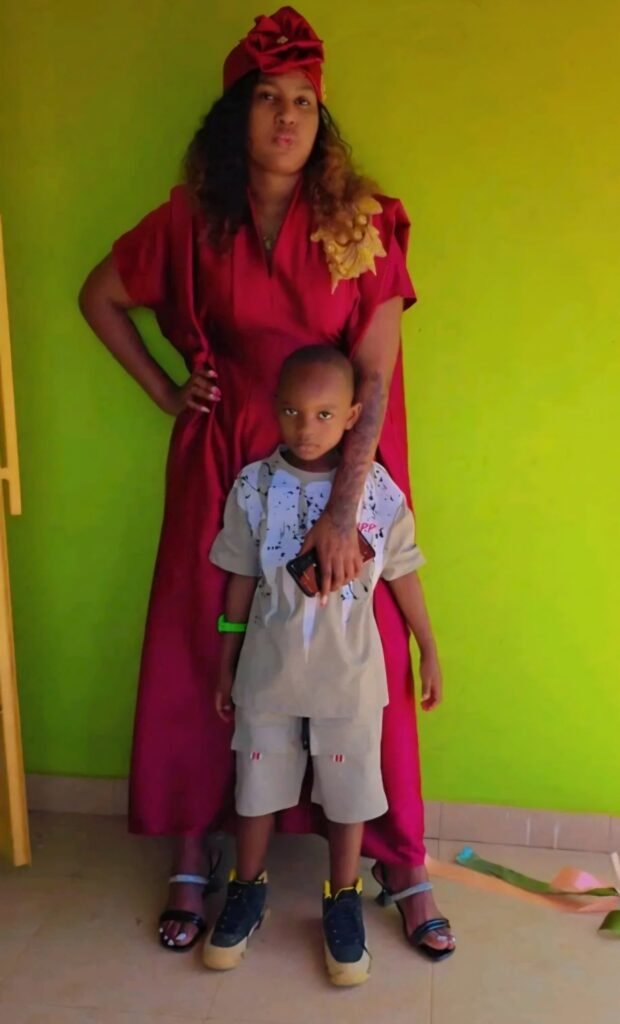
The claim, first amplified early Monday morning by accounts such as @PulseofNBO, quickly spread across X (formerly Twitter), drawing thousands of views, reposts, and replies within hours. Accompanying the posts was a still image from one of her TikTok clips showing the creator in a striking red outfit standing with a young child against a bright green backdrop, along with calls to “watch” and links directing users to Telegram channels for fuller collections of her content.
What began as a relatively straightforward promotional post has evolved into a broader conversation about viral fame, digital entertainment, and the peculiar way Kenyan online communities describe content that crosses social, regional, and even generational lines.
Multiple accounts echoed similar language throughout Sunday and Monday, declaring that “Kenyan TikToker Jennifer has united Kenyans” or that she had “decided finally to unite the nation.” Many of these posts included the same water-droplet and fire emojis commonly used to signal highly engaging or attention-grabbing material, and nearly all funneled interested viewers toward private Telegram groups where longer compilations or additional clips were said to be available.
The phenomenon illustrates several overlapping realities of contemporary Kenyan digital culture. TikTok remains one of the most influential platforms among young Kenyans, serving simultaneously as entertainment, income source, social barometer, and occasional political arena.
Creators who manage to produce material that feels broadly relatable or simply irresistible often find their work framed in language of national cohesion, even when the content itself is primarily entertainment-driven rather than explicitly civic or educational.
Jennifer’s sudden visibility this week fits a recognizable pattern. Over the past year, various Kenyan creators have been similarly celebrated or meme-ified with claims that their videos “united” audiences. The phrasing appears to function as both genuine praise for wide appeal and a tongue-in-cheek promotional device that encourages sharing.
In a country where public discourse frequently highlights ethnic, political, and class divisions, the idea that a single creator’s output could momentarily bring people together holds particular cultural resonance. Entertainment, comedy, music, and visually striking short-form video have long served as informal bridges across those divides.
Details about Jennifer’s precise content remain somewhat fragmented outside the closed Telegram channels. Publicly shared stills and short descriptions point to a mix of lifestyle, dramatic, and highly stylized clips. One widely circulated image depicts her in formal or ceremonial attire with a child, suggesting family-oriented or culturally resonant material.
At the same time, the consistent use of suggestive emojis and the migration of full videos to private messaging apps indicate that portions of her catalogue are more adult-oriented or otherwise restricted on mainstream platforms. This dual character is not unusual among successful East African creators, many of whom maintain both broadly accessible and more exclusive streams of content.
Engagement numbers attached to the original posts underscore the speed of the spread. The @PulseofNBO post alone accumulated tens of thousands of views and dozens of reposts within a short window. Related accounts posting similar messages reported comparable traction.
Replies ranged from straightforward requests for links to humorous commentary on the “unifying” claim, with some users treating the entire episode as light-hearted national banter. Others noted the recurring nature of such campaigns, pointing out that similar “uniting videos” language has appeared in connection with other creators in previous months.
The role of Telegram in this ecosystem deserves particular attention. While TikTok and X serve as discovery platforms, Telegram has become a preferred distribution channel for content that may face algorithmic limits, community guideline restrictions, or simply requires longer formats.
Kenyan users have grown accustomed to this two-step process: a teaser or still image appears on public timelines, followed by an invitation to join a channel for the complete experience. The practice raises familiar questions about platform governance, content moderation, and the economics of digital attention, yet it has proven remarkably effective at sustaining interest.
To understand why such moments gain traction, it helps to place them within the larger landscape of Kenyan TikTok culture. The platform has produced a succession of breakout stars over recent years, ranging from comedy skit creators and dance challengers to lifestyle vloggers and social commentators.
Some have leveraged their followings into brand deals, television appearances, or political commentary. Others remain primarily entertainment figures whose value lies in consistently delivering material that people want to watch and share. The language of “unifying the nation” elevates ordinary viral success into something closer to a cultural event, even if only temporarily.
Kenya’s social fabric provides fertile ground for this framing. Public conversations regularly return to themes of national cohesion, whether in the context of elections, economic pressure, or regional identity.
When a piece of entertainment briefly dominates timelines and prompts people from different backgrounds to engage with the same material, observers often interpret it as a small win for shared experience. Whether Jennifer’s videos genuinely achieve that effect or simply benefit from clever promotional language is partly beside the point; the framing itself has become part of the story.
Observers of digital trends note that the speed of amplification has increased. A post published in the early morning can dominate afternoon conversations thanks to algorithmic recommendation and the dense networks of Kenyan accounts that monitor and redistribute trending material.
Accounts specializing in “trending now,” gossip, or viral video aggregation play a central role, often acting as secondary amplifiers that push content beyond its original audience. In Jennifer’s case, several such accounts posted nearly identical messaging within a short time frame, creating the impression of a coordinated or at least synchronized wave of attention.
There is also a commercial dimension. Creators who attract this level of notice frequently see spikes in follower counts, live-stream gifts, brand inquiries, and direct monetization opportunities. Telegram channels themselves sometimes operate on subscription or donation models. For an individual creator, a sudden “unifying” moment can translate into tangible economic benefit, reinforcing the incentive to produce content capable of generating such reactions.
Critics of the phenomenon point to the ephemeral nature of most viral spikes. Many creators enjoy brief periods of intense visibility only to return to more modest engagement levels once the cycle moves on. Sustainability remains a challenge.
Building a durable audience requires consistent output, platform literacy, and an ability to adapt as algorithms and audience tastes shift. Those who succeed over the longer term tend to diversify across platforms and content styles rather than relying solely on periodic viral moments.
The episode also invites reflection on the relationship between mainstream platforms and alternative distribution channels. When content migrates en masse to Telegram or similar apps, it partially escapes the visibility and moderation systems of TikTok and X.
This can protect creators from certain forms of censorship or demonetization, but it also reduces transparency and makes it harder for researchers, journalists, or regulators to track the full scope of circulating material. In an environment where misinformation, deepfakes, and non-consensual content remain ongoing concerns, the shift toward closed channels carries both advantages and risks.
From a cultural studies perspective, the repeated invocation of national unity through entertainment is revealing. It suggests that many Kenyans experience digital spaces not only as sources of diversion but as arenas where collective identity is continually negotiated. A video that “unites” people, even if only in shared laughter, curiosity, or desire, becomes a symbolic counterweight to narratives of fragmentation. Whether that symbolism is fully earned by any single creator is less important than the fact that audiences find the framing meaningful enough to repeat and circulate.
Jennifer’s current moment arrives against a backdrop of ongoing platform evolution. TikTok continues to refine its policies in Kenya and across Africa, periodically removing large volumes of videos for guideline violations while simultaneously investing in creator funds and digital literacy programs. X remains a primary venue for real-time commentary and amplification. Messaging apps fill the gaps. Navigating this multi-platform environment has become a core skill for ambitious creators.
Looking ahead, it is difficult to predict how long the current wave of attention will last. Viral cycles on Kenyan social media can be intense but short-lived. What endures is the underlying pattern: audiences continue to reward content that feels broadly accessible or simply compelling, and promoters continue to package that success in the language of collective experience. As long as those dynamics persist, new “unifying” figures will emerge, each briefly claimed as a digital force for bringing people together.
In the meantime, the posts keep circulating. Users continue to share the still image of Jennifer in red, to request Telegram links, and to debate, joke about, or simply enjoy the spectacle. For a few days at least, one Kenyan TikToker’s videos have become a shared reference point across timelines and group chats. Whether that constitutes genuine national unification or merely effective digital marketing is a question each viewer can answer for themselves. What remains clear is that the machinery of online attention in Kenya remains highly efficient at elevating individual creators into temporary symbols of something larger than themselves.
The story of Jennifer’s latest viral turn ultimately says as much about the audience as about the creator. In a noisy, competitive attention economy, the desire for content that feels inclusive or simply irresistible continues to drive engagement. Platforms reward that desire with reach. Promoters translate reach into the language of unity. And for a brief window, large numbers of people find themselves watching, sharing, and commenting on the same material. In the fragmented landscape of contemporary digital life, that temporary convergence is itself noteworthy.
As Monday progressed, additional accounts joined the chorus, some offering new stills, others simply repeating the now-familiar claim that Jennifer had once again managed to “unite” audiences. The pattern suggests that the phenomenon has developed its own self-reinforcing momentum. Whether it leads to sustained career growth for the creator or fades into the next wave of trends remains to be seen. For now, the conversation continues, one share, one reply, and one Telegram join at a time.
In the broader context of East African digital culture, moments like this serve as useful case studies. They reveal how language, imagery, platform architecture, and cultural aspirations interact to produce sudden visibility. They also highlight the continuing importance of entertainment as a site of informal social cohesion. While political and economic news often dominate formal media, short-form video frequently occupies the emotional and social center of many users’ online lives. When that video is framed as nationally unifying, it taps into deeper yearnings for connection that transcend any single clip or creator.
Jennifer’s current visibility therefore belongs to a longer tradition of Kenyan creators who have momentarily occupied the national digital conversation. From dance challenges that crossed borders to comedy skits that mocked shared frustrations, entertainment has repeatedly demonstrated its capacity to draw disparate audiences into the same moment of attention. The specific content may change, the platforms may evolve, and the promotional language may grow more self-aware, but the underlying dynamic persists.
For journalists, researchers, and ordinary users alike, the episode offers a reminder to look beyond the surface claim of unity and examine the mechanisms that produce it: the algorithms that surface content, the networks of accounts that amplify it, the private channels that host it, and the cultural scripts that give it meaning. Understanding those mechanisms is essential to understanding how digital culture actually operates in Kenya today.
As the day continues, more posts will almost certainly appear, more links will be shared, and more viewers will decide for themselves whether Jennifer’s videos live up to the unifying reputation being attached to them. In the process, they will participate in a distinctly contemporary form of collective experience—one mediated by smartphones, shaped by algorithms, and narrated in the playful, sometimes exaggerated language of social media. That, more than any single video, may be the most lasting feature of the story.